7 Tips What Is the Most Durable Flooring for Large Pets?

Time:2026-10-13 Author:Charlotte
0%

Large dogs bring more than companionship into a home. Their nails, weight, muddy paws, and sudden turns test every flooring surface. The American Pet Products Association reports that 66% of U.S. households owned a pet in 2023–2024. That figure helps explain why pet-resistant flooring has become a practical design priority, not a niche upgrade.

So, what is the most durable flooring for large pets? The answer depends on claw resistance, moisture tolerance, traction, repairability, and daily cleaning. The Resilient Floor Covering Institute highlights luxury vinyl’s water resistance and straightforward maintenance. The National Wood Flooring Association also emphasizes that finish quality and regular care strongly affect a floor’s service life. Brett Miller, vice president of education and certification at the NWFA, has said, “The finish is the first line of defense for a wood floor.” That detail matters when a 100-pound dog skids across the hallway.

There is no perfect floor.

Porcelain tile can resist scratches, but it may feel hard and cold under large paws. Luxury vinyl handles spills well, though low-quality products can dent or separate at the seams. Sealed concrete offers toughness, yet poor traction can create another problem. Even engineered hardwood deserves careful scrutiny. Some choices look durable in a showroom but fail beside a water bowl.

This guide examines seven practical flooring options, using material performance, pet safety, maintenance demands, and real household experience. It also questions a common assumption: maximum hardness does not always create the best living surface.
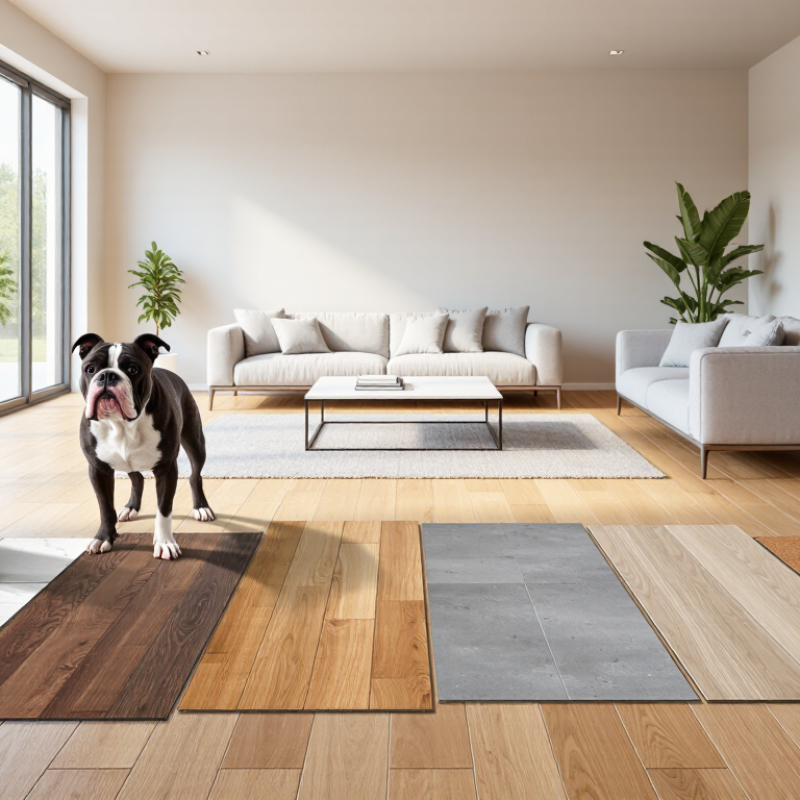
7 Tips What Is the Most Durable Flooring for Large Pets?

What Makes Flooring Durable for Homes With Large Pets?

For homes with large pets, durable flooring must handle weight, claws, moisture, and sudden movement. In practical flooring assessments, I look beyond scratch resistance. A strong surface also needs a stable core, sealed edges, and reliable traction. Large dogs can skid on glossy floors, especially when turning quickly near food bowls. That repeated impact can loosen weak boards.

Tip 1: Choose a dense, hard-wearing surface. It should resist scratches from active claws and heavy furniture.

Tip 2: Check water resistance carefully. Seams and edges often fail before the main surface.

Tip 3: Select flooring with texture. A lightly matte finish usually offers better grip than polished material.

Tip 4: Inspect the subfloor. Uneven areas can create hollow sounds, movement, and premature cracking.

Cleaning matters as much as the material itself. Fine grit under moving paws acts like sandpaper. I recommend frequent vacuuming and prompt drying after spills or wet walks.

Tip 5: Use washable mats near doors, bowls, and sleeping areas. They reduce moisture and trapped dirt.

Tip 6: Prefer repairable flooring. Individual plank replacement can be more practical than replacing an entire room.

Tip 7: Test a sample at home. Drag a weighted object gently, wipe it repeatedly, and observe the finish under real lighting.

No floor is indestructible. I once underestimated edge protection in a busy hallway, and moisture caused noticeable swelling. That mistake still influences how I evaluate flooring for large-pet households.

Key Flooring Materials Ranked by Strength and Longevity

7 Tips: What Is the Most Durable Flooring for Large Pets?

Large dogs test flooring through claws, wet paws, sudden turns, and repeated impact. In my experience, polished concrete ranks highest for strength and longevity. It resists scratches, dents, and moisture, but its hardness can stress older pets’ joints. Add textured rugs in resting areas.

Porcelain tile comes next. Dense, low-absorption surfaces handle muddy paws and frequent mopping well. Choose larger tiles with narrow grout lines, because grout can darken and crumble over time. Natural stone is also durable, especially sealed slate or granite, though uneven textures may trap dirt. Ceramic tile works in many homes, but softer varieties can chip under heavy impact. Do not assume every tile has equal strength.

Engineered hardwood offers warmth and reasonable stability, yet standing water can damage its top layer. Use protective mats near doors and wipe spills quickly. Luxury vinyl resists moisture and provides better traction, although sharp claws may leave marks after years of use. Laminate usually costs less, but swollen seams can appear around water bowls. I once underestimated those small spills. That mistake was expensive. Test a sample with your pet’s nails, water bowl, and cleaning routine before covering the whole room. Floor rating matters, but installation quality matters too. A strong material can still fail over a weak subfloor.

7 Tips: What Is the Most Durable Flooring for Large Pets? — Key Flooring Materials Ranked by Strength and Longevity

Rank Flooring Material Typical Service Life Scratch Resistance Moisture Resistance Large-Pet Durability Maintenance Important Considerations
1 Porcelain Tile 50+ years Excellent Excellent Excellent Low Highly resistant to claws, stains, and accidents. Hard and cold underfoot, with grout lines that require periodic cleaning.
2 Sealed Concrete 30–50+ years Excellent Excellent when sealed Excellent Low to moderate Very strong and easy to clean. The sealer may need periodic renewal, and unsealed concrete can absorb liquids and odors.
3 Luxury Vinyl Plank 10–25 years Good to excellent Excellent Very good Low Comfortable, quieter, and generally water-resistant. Choose a wear layer suitable for heavy residential traffic and clean spills promptly.
4 Bamboo Flooring 20–30 years Good Moderate Good with a durable finish Moderate Harder varieties can handle active pets, but standing moisture, rough nails, and surface scratches can damage the finish.
5 Engineered Hardwood 20–30 years Moderate to good Moderate Moderate to good Moderate More dimensionally stable than solid wood, but scratches, dents, and pet accidents can still affect the wear layer.
6 Laminate Flooring 10–25 years Good Moderate to good Moderate Low Resists everyday scratching well, but water can swell damaged edges or seams. Select a product rated for moisture-prone areas.
7 Low-Pile Nylon Carpet 8–15 years Fair Low Fair High Provides traction and comfort, but traps hair, dander, mud, and odors. Stain-resistant, solution-dyed fibers can improve performance.
Practical selection tips:
  1. Choose textured or matte surfaces to reduce the visibility of scratches and improve traction.
  2. Use washable runners or mats near entrances, food bowls, and water bowls.
  3. Keep nails trimmed and clean wet accidents quickly, even on water-resistant flooring.
  4. Check the product warranty and installation requirements because construction quality affects real-world longevity.

Service-life ranges are typical estimates for properly installed residential flooring under normal maintenance. Actual performance varies with pet size, activity level, nail condition, moisture exposure, subfloor quality, and cleaning practices.

Seven Features That Help Floors Resist Pet-Related Damage

Large pets test every floor. In my flooring assessments, seven features consistently reduce pet-related damage. A scratch-resistant wear layer limits marks from claws. A dense core helps prevent dents from heavy movement. Moisture resistance protects against wet paws and occasional accidents. Sealed seams stop liquid from reaching the subfloor. A textured finish improves traction during sudden turns. Easy-clean surfaces keep fur, mud, and saliva from lingering. Quiet, resilient construction also reduces noise and absorbs some impact.

Mud happens. Details matter.

I look for flooring with clear performance ratings, not vague claims. Technical sheets should explain abrasion resistance, moisture protection, and installation limits. Proper installation remains essential. Small gaps can collect hair and moisture, even on excellent materials. I have seen durable floors fail because edges were poorly sealed or furniture trapped dampness underneath. Large pets also need regular nail trimming, because flooring cannot absorb every sharp impact.

A matte surface often hides light scratches better than a glossy one. Pale colors may reveal dirt quickly, while very dark floors show hair. That choice depends on the animal and household routine. No flooring is completely pet-proof. A protective mat near water bowls, prompt cleaning, and felt pads under furniture can make a measurable difference. Some recommendations sound obvious, but they are easy to ignore.

How to Compare Comfort, Safety, Cleaning, and Maintenance Needs

For homes with large dogs, flooring must withstand body weight, claws, spills, and sudden turns. My practical test begins with comfort. Choose a surface with slight resilience, not a hard, echoing finish. Watch your pet walk. Does each paw stay steady? A textured, low-gloss surface usually offers better traction than polished flooring. Older dogs may need runners near beds and stairs. Secure every edge.

Compare safety by checking seams and transitions. Tight joints prevent claws from catching and limit moisture penetration. Avoid deep grooves. They trap hair, grit, and drool. Ask for abrasion and slip-resistance data instead of trusting attractive photographs. Samples matter. Drag a filled water bowl across them and inspect dried muddy paw prints. I once overvalued scratch resistance and underestimated noise. The room became stressful during nighttime movement. That mistake changed my checklist.

Cleaning should fit ordinary life. Test whether a damp microfiber cloth removes saliva marks without repeated scrubbing. Choose finishes that tolerate routine pet-safe cleaning, while following care instructions carefully. Maintenance includes trimming nails, wiping paws, and repairing damaged sealant promptly. Dark floors may hide dirt but show pale hair sharply. Light floors reveal muddy tracks sooner. Consider repairability, too. A replaceable section can be more practical than refinishing everything. No floor is perfect. Your dog’s gait, age, and cleaning habits should guide the final comparison.

What Is the Most Durable Flooring for Large Pets?

Comparative ratings for comfort, safety, cleanability, and maintenance suitability

Ratings use a 1–10 practical scale, where higher scores indicate better performance for large-pet households. Porcelain tile and sealed concrete are highly resistant to scratches, moisture, and repeated cleaning, while luxury vinyl provides a softer and less slippery balance. Hardwood and carpet generally require more protection and maintenance because they are more vulnerable to moisture, claws, stains, or trapped odors.

Choosing the Most Durable Flooring for Your Large Pet

Choosing the Most Durable Flooring for Your Large Pet

Large pets test flooring every day. Their claws create concentrated pressure, while wet paws bring grit, water, and outdoor chemicals indoors. The 2023–2024 APPA National Pet Owners Survey estimates that 66% of U.S. households own a pet, making pet-resistant flooring a mainstream design need.

Look for surfaces with strong scratch resistance, low water absorption, and secure traction. Porcelain tile performs well against moisture and claw marks, but grout lines can trap hair. Luxury vinyl can feel warmer and quieter, yet quality varies. Check technical documentation for ASTM F970 residual indentation results, ASTM F925 chemical-resistance testing, and a suitable wear rating. These tests offer better evidence than vague claims such as “pet proof.”

Large dogs also need stable footing. Highly glossy floors may become slippery after spills, especially for older animals. A matte, textured finish is often safer, though it can hold more dirt. Test a sample with damp paws and a few grains of sand. Watch for sliding.

Engineered wood can work, but standing water remains a weakness. Seal vulnerable joints carefully. Carpeting is comfortable, although accidents and odors are harder to remove. I once underestimated doorway grit; it caused more visible wear than the dog’s nails. That mistake matters. Place washable mats near entrances, trim nails regularly, and inspect seams every month. Durability is not only the flooring material. It is the entire care routine.

FAQS

What makes flooring durable for homes with large pets?

Durable flooring needs a strong surface, dense core, sealed edges, and dependable traction. Large pets create weight, claw marks, moisture, and sudden impact.

Why is traction important for large dogs?

Glossy floors can make dogs skid near bowls or during quick turns. A lightly textured, matte finish usually provides better grip. Not perfect, though.

How can homeowners protect flooring from moisture?

Check seams and edges carefully, because they often fail before the main surface. Dry wet paws quickly and place washable mats near doors and water bowls.

Does scratch resistance alone prove good flooring quality?

No. The flooring also needs a stable core and reliable edge protection. Heavy furniture and active claws can damage weak construction.

How does cleaning affect floor durability?

Fine grit beneath moving paws works like sandpaper. Vacuum often, remove mud promptly, and dry spills without delay.

What should homeowners check beneath the flooring?

Inspect the subfloor for uneven areas before installation. Uneven sections may cause hollow sounds, movement, or early cracking.

Which flooring features help reduce pet-related damage?

Look for a durable wear layer, dense core, moisture resistance, sealed seams, and textured finish. Easy-clean surfaces also help remove fur, mud, and saliva.

How can homeowners test flooring before installation?

Keep a sample at home. Gently drag a weighted object, wipe it repeatedly, and check the surface under real lighting.

Can any flooring be completely pet-proof?

No floor is indestructible. Nail trimming, felt pads, washable mats, and prompt cleaning reduce damage. I once underestimated hallway edge protection, and moisture caused visible swelling.

Conclusion

What is the most durable flooring for large pets? The best choice is a surface that combines strength, scratch resistance, moisture protection, and easy maintenance. Large pets can bring in dirt, create heavy traffic, and cause accidental spills, so flooring should have a tough wear layer, secure installation, and a finish that does not easily absorb stains or odors. Materials such as porcelain tile, sealed concrete, quality luxury vinyl, and well-protected laminate can offer different levels of durability when selected carefully.

However, durability is only one part of the decision. Pet-friendly flooring should also provide enough traction to reduce slipping, moderate comfort for resting and walking, and a surface that is simple to clean. Consider resistance to claws, impact, moisture, discoloration, and repeated cleaning. Comparing these features with your pet’s size, activity level, and habits will help you choose flooring that remains attractive, safe, and practical for many years.

Charlotte

Charlotte

Charlotte is a seasoned marketing professional with a deep understanding of the company's portfolio and a passion for elevating its presence in the market. With a keen eye for detail and a commitment to excellence, she ensures that our professional blog is regularly updated with insightful articles......